
Start With the Room, Not the Look
The right tile is decided by where it goes. A bathroom floor needs slip resistance; a kitchen backsplash needs easy cleaning; a busy hallway needs a hard wear rating. Pick the technical class first, then choose the color and finish inside that class.
The Five Numbers That Matter
| Property | What it tells you | Rule of thumb |
|---|---|---|
| PEI rating | Surface wear resistance | PEI 3+ for floors, PEI 4–5 for busy areas |
| Water absorption | Density and frost resistance | ≤0.5% = porcelain, best for wet/outdoor |
| Slip resistance (R) | Grip underfoot | R10–R11 for bathrooms, R11+ for wet/outdoor |
| Rectified edge | Precision of the edge | Rectified = thinner grout lines |
| Nominal size | Look and grout frequency | Larger formats read calmer, fewer joints |
Ceramic vs. Porcelain
Porcelain is a denser, less porous type of ceramic (water absorption ≤0.5%), which makes it harder, frost-proof and better for floors, wet areas and outdoors. Standard ceramic is lighter and easier to cut, and is excellent for walls and low-traffic floors. Compare both in the ceramic catalog and porcelain catalog, and see the full breakdown in Porcelain, Ceramic, Quartz & Marble Countertops.
Finish and Color
Matte and textured finishes hide smudges and grip better underfoot; polished finishes look richer but show water spots and can be slippery. Large-format, rectified tiles with thin grout lines read as one calm surface — ideal for modern interiors.
See It Next to Everything Else
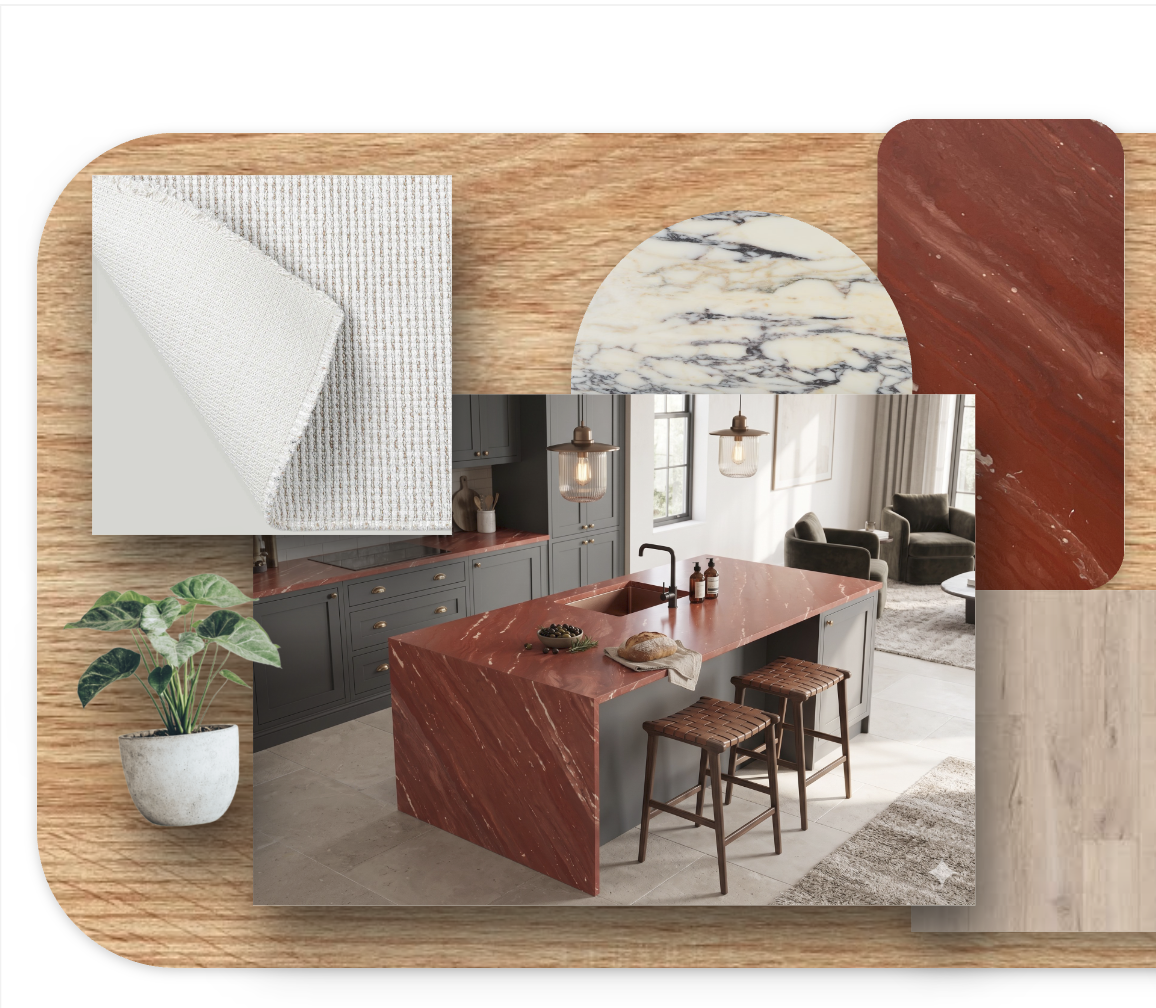
Tile never lives alone. Before ordering, set your tile beside the floor, counter and paint on a Numuneler moodboard — it is the cheapest way to catch a clash. Choosing between tile and wood underfoot? Read Ceramic or Parquet?
Frequently Asked Questions
Is porcelain always better than ceramic?
No. Porcelain is denser and better for floors, wet areas and outdoors, but standard ceramic is easier to cut and perfect for walls and light-traffic floors — often at a lower price.
What PEI rating do I need for a floor?
PEI 3 or higher for most residential floors, and PEI 4–5 for kitchens, hallways and commercial spaces.
Which tile is safe for a wet bathroom floor?
Look for R10–R11 slip resistance and low water absorption (porcelain). Textured or matte surfaces grip better than polished ones.